Spring is a good time to hunt aoudad in West Texas, but sometimes the weather can get in the way
West Texas weather can be unpredictable in the spring
Share this story
This article was first published in my email newsletter in February of 2026. I've added it to my website, because I think the information is useful in general, not just for the month it was published. If you'd like to keep up with the latest hunting information, including my open dates and available hunts, you can subscribe to my newsletter at the bottom of this page.
Back in late November, I wrote about my annual hunt calendar -- what I hunt at different times of the year and why I do those hunts when I do them. I’ve gotten some follow-up questions about that calendar, so I’ll take a little time to explain a few things in more detail.
This month, I’ll talk about my spring aoudad hunts.
In my earlier piece, I explained that there are some weather-related risks associated with hunting aoudad in the spring. The best time for aoudad hunts is September and October, during their primary rut, when West Texas weather is pretty stable, and right after that, in November and December.
But those hunts don’t work for everyone — maybe you have other obligations — and even if you can work it into your own schedule, those are popular hunts, and it’s hard to get a booking.
So the spring is a decent alternative. There’s a secondary rut going on, and, if the weather cooperates, it’s a pretty good time to hunt. The problem is the word ‘cooperates’. On the whole, I think spring aoudad hunts are a good option, but I want my hunters to go into spring hunts with their eyes open, understanding how the weather may choose to be uncooperative.
I used to do aoudad hunts in January and February, too, but the frequency of bad weather made me decide to stop. I shifted the start of my spring aoudad season to late February, where the odds of good weather were a lot better.
What do I mean when I talk about bad weather? Here’s the kind of weather that can hit West Texas in the spring, and how those weather events can affect your hunt.

WIND
There’s always some wind in aoudad country, but in the spring, there’s something called ‘The Big Blow’. You may be facing winds of 35 mph in the valleys, and that can turn into 50 mph wind when it comes rushing up the hillsides. That can have a big effect on your hunt.
First of all, when there’s wind at that level, the aoudad take shelter. They’re going to be a lot harder to find, and that will limit your shot opportunities. It can also limit your choice of trophy-worthy rams.
Second, there’s dust. Much of West Texas aoudad country lies in arid, high-desert terrain. Winters are typically dry, and by early spring the lowlands and open flats have little moisture to hold the soil. When spring winds kick up, fine desert dust can quickly fill the air, reducing visibility, making glassing really difficult, and adding another layer of challenge to the hunt.
So the problem with wind isn’t that it makes your hunt impossible, just that it makes it harder.

RAIN
I just explained how dry it can be at this time of year in West Texas, but that doesn’t mean we don’t get rain, and when we do, it can be a problem.
The biggest problem is that it becomes really hard to get around, even with four-wheel drive. Terrain is muddy and slippery, and, once you’re on foot, wet rocks are slippery and dangerous. When things are really bad, we can’t get onto the ranches at all. For the most part, ranch roads are just two tracks/dirt roads, and driving on them just tears them up. The ranch owners won’t permit it.
SNOW
Snow is a risk, too. I’ve been sitting in Alpine, Texas, getting ready to start a hunt on a nearby ranch, when a blizzard roared in, blinding drivers (and hunters) and turning roads impassable.
Keep in mind that six inches of snow in West Texas is not the same thing as six inches of snow in Minnesota. Northern states have enough equipment to clear their roads and highways within hours. That’s not the case in West Texas. And that’s certainly not the case for ranch roads. A half-foot of snow simply shuts things down.
FREEZING FOG AND HOARFROST
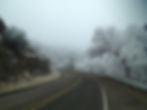
Another West Texas weather phenomenon is freezing fog and hoarfrost. Fog is always a problem for visibility, but it becomes more difficult when temperatures are below freezing. In that case, the water droplets in the fog are ready to freeze, and they’ll freeze as soon as they hit something solid — including grass, brush, and rocks. That ice makes footing treacherous, and it means that every step you take announces your presence with crackling and crunching.
FREEZING TEMPERATURES
In the high desert country of West Texas, daily temperature swings can be dramatic. It may be freezing overnight and T-shirt weather by mid-afternoon. That makes packing tricky and often means adding and shedding layers throughout the day—but it doesn’t stop the hunt.
What does stop it is sub-freezing temperatures that persist all day for multiple days in a row.
We Texans don’t build for hard freezes. They’re too rare. Pipes often aren’t insulated, and in West Texas it’s common to see large water lines run above ground. That’s fine for an overnight cold snap, but when a freeze lasts several days, those pipes can freeze and burst. Suddenly, there’s no water for basic needs—washing up, cleaning gear, or even keeping camp functional. There may be no choice but to go home.


WHAT THIS ALL MEANS
Now that I’ve given you the hard facts, let me give you some sunlight, too.
This kind of weather isn’t the standard, but the possibility is something you’ve got to accept and be ready for if you book a hunt in West Texas in the spring.
It’s rare that one of these weather events would ruin your whole hunt, but it could certainly take a day out of it. And ‘rare’ doesn’t mean ‘never’.
But keep in mind: If that kind of really bad weather happened all the time, I wouldn’t do these hunts — that’s why I stopped my January and early February hunts; these weather events were just too common at that time of year.
But if you want an aoudad hunt and you can’t book it during the fall, this is an option you should consider.
Share this story